


Empowering electric toothbrushes with scanning servo motors to promote modern oral health management
In the fast-paced and demanding modern life, electric toothbrushes have evolved from an "emerging trend" to a standard tool for daily oral care. It reshapes the brushing experience with the power of technology, upgrading traditional manual cleaning into an efficient, precise, and intelligent new way of health, becoming the preferred choice for more and more families pursuing oral health. Electric Toothbrush is an intelligent oral care tool that uses an electric motor core to drive the brush head to generate high-frequency vibration or rotational motion, achieving efficient cleaning of teeth and gums. Its history can be traced back to 1954, invented by Swiss doctor Philippe Guy Woog with the original intention of providing a more convenient way for people with limited mobility to brush their teeth. After decades of development, electric toothbrushes have moved from medical assistive devices to the mass consumer market and become widely recommended cleaning tools by dental experts worldwide.

1、 How does an electric toothbrush work?
The working principle of an electric toothbrush is actually not complicated. Simply put, it uses electricity to drive the movement and generate specific mechanical movements, thereby driving the brush head to complete the cleaning action.
Although there are various types of toothbrushes on the market, their core principles can be summarized into the following mainstream methods:
1. Rotating
This is the earliest type of electric toothbrush that appeared, with a relatively simple and direct principle. The core mechanism is to use a motor to drive a circular brush head for high-speed rotation. The brush head usually rotates alternately clockwise and counterclockwise at a speed of several thousand to tens of thousands of revolutions per minute.
The advantage is strong friction, mainly relying on the physical rotation friction of bristles to remove dental plaque; Strong cleaning power, very good cleaning effect on the surface of teeth. The disadvantage is that the noise is relatively high, and the risk of enamel wear is relatively high. In addition, the brush head is usually smaller, and its ability to penetrate into the gaps between teeth is not as good as acoustic waves.
2. Sonic Vibration
This is currently the most mainstream and common type on the market. The principle is to use magnetic levitation motors or ordinary hollow cup motors to drive the brush head to perform high-frequency reciprocating linear motion (usually up and down vibration). There are two cleaning methods: by physically contacting the teeth, the bristles shake frequently, and directly shake off stains. Or use fluid power: this is the "trump card" of sonic toothbrushes. High frequency vibration can drive toothpaste and water to produce a large number of tiny bubbles (cavitation effect), and the pressure generated when the bubbles burst can penetrate deep into the gaps between teeth, flushing out areas that are difficult to reach by manual brushing.
Key Features:The cleaning range is wide, it can clean the surface of teeth and also clean the gaps between teeth through water flow. High comfort, compared to rotary type, it is gentler on the gums and has less noise.
3. Ultrasonic
This is a relatively high-end technology that is easily confused with "sonic toothbrushes". The core principle is to use piezoelectric transducers to generate mechanical waves with ultrasonic frequencies (>20000 Hz). Then, relying on the cavitation effect of ultrasound in periodontal tissue to destroy bacterial cell walls and loosen dental calculus, rather than relying solely on brush friction.
The advantages are quietness and gum protection, almost silent operation, minimal tooth wear, and even therapeutic effects that promote gum blood circulation. Overall, regardless of the principle, the core advantages of electric toothbrushes are high frequency and stability. It can exercise at a frequency far beyond manual brushing (tens of thousands or even hundreds of thousands of times per minute), thus more thoroughly removing dental plaque.
4. Sweeping Oscillating
This is the focus of this article's discussion, and the application field of integrated sweep vibration motors is currently a relatively advanced technology.
A sweeping vibrating motor is a composite motor that can simultaneously achieve high-frequency vibration and large angle swing. It is mainly used in devices such as electric toothbrushes to improve cleaning efficiency through composite motion. Its technology can also be extended to other surface treatment equipment, such as cleaning brushes. Compared to traditional brushed motors, sweeping motors have higher cleaning efficiency and more stable operation.
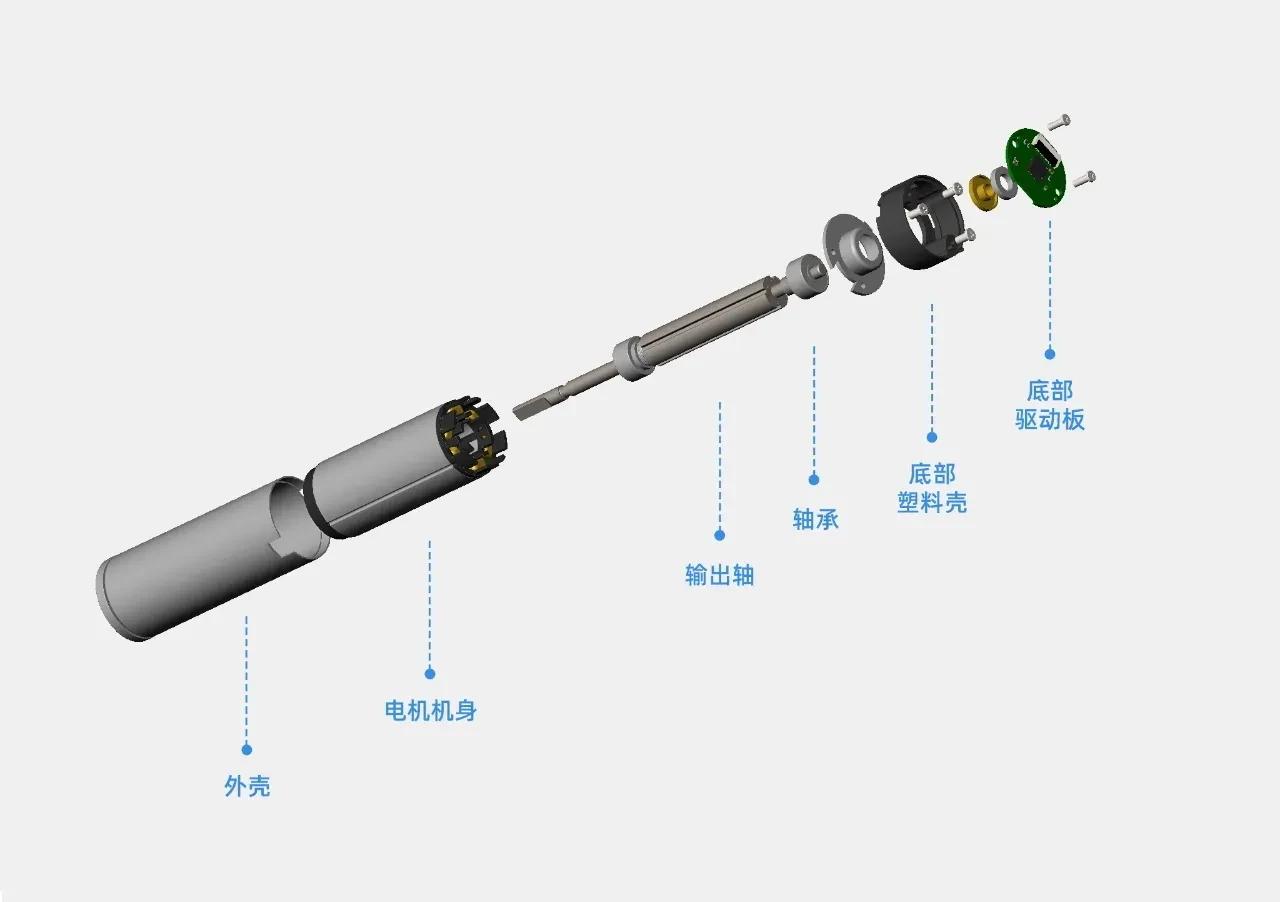
2、 Working principle of scanning vibration motor
Specifically, the working principle of a sweeping motor is to generate centrifugal force through internal structural design (such as stator, rotor components, and eccentric blocks) when powered on, thereby driving the motor to achieve high-frequency vibration and axial swing. This composite motion can drive the brush head to rotate around the motor axis while vibrating, simulating the motion trajectory of the Babbitt brushing method, and more effectively removing food residue and dental plaque in the gaps between teeth. Simply put, its operating principle can be understood as: "The internal rotor rotates at high speed, driving the external brush head to retrace.
1. Core operating mechanism: centrifugal force and transmission
Sweeping vibration motor is essentially a special type of vibration motor, and its operation mainly relies on the coordination of electromagnetic induction and mechanical structure:
Electromagnetic drive (power source):When current passes through the coils inside the motor, a rotating magnetic field is generated. This magnetic field drives the rotor (usually with an eccentric block) to rotate at high speed.
Excitation force generation:The eccentric blocks at both ends of the rotor generate centrifugal force (excitation force) during high-speed rotation.
Composite motion output:Unlike ordinary motors that only produce linear vibrations, sweeping motors convert the circular rotational motion of the rotor into planar oscillation or three-dimensional sweeping motion of the driving end (such as a toothbrush head) through a special gear or connecting rod transmission structure.
2. Operation mode: vibration+sweeping
When the sweeping motor is running, it is not a single vibration, but a combination of two actions:
Operation mode, operation characteristics, and functions
The high-frequency vibration frequency is extremely high (up to 60000 times/minute or more), and the bristles perform micro level rapid forward and backward movements. Shake and loosen dental plaque, generate flow cleaning power with water flow, and penetrate deep into the gaps between teeth.
The brush head swings back and forth at a large angle around the motor axis as a whole (simulating brushing action). Simulate the Babbitt brushing method to physically 'sweep' away dirt from the surface of teeth.
3. Intelligent servo control (key upgrade)
The reason why modern "sweeping servo motors" are advanced is that they not only "turn when powered on", but also have closed-loop control capabilities. It is like a smart assistant that adjusts its operating status according to the environment. The motor integrates sensors (such as current sensors or Hall sensors) inside, which can sense the resistance of the brush head in real time (such as brushing teeth or cheeks). Through the built-in PID algorithm, when the brush head is obstructed (due to excessive force or uneven contact surface), the motor will instantly increase torque, maintain the set vibration frequency and swing amplitude, and ensure that the cleaning force does not decay. The advanced digital control system can even remember the user's usage trajectory, automatically adjust the amplitude, frequency, and swing angle according to the flatness of different areas of the mouth, in order to achieve the best energy-saving and cleaning effect.
Main features and structure
Compact design:The sweeping motor adopts an integrated structure, such as a combination of a drive board and a servo motor, which is compact in size and suitable for installation in the handle of an electric toothbrush.
Control method:Adjust vibration amplitude, frequency, and swing angle through serial port commands (such as UART), support multi level adjustment (such as 10 levels), and achieve different cleaning modes.
Adaptive function:Some scanning motors are equipped with digital control systems that can automatically optimize vibration parameters and reduce energy consumption based on usage scenarios such as oral surface flatness.
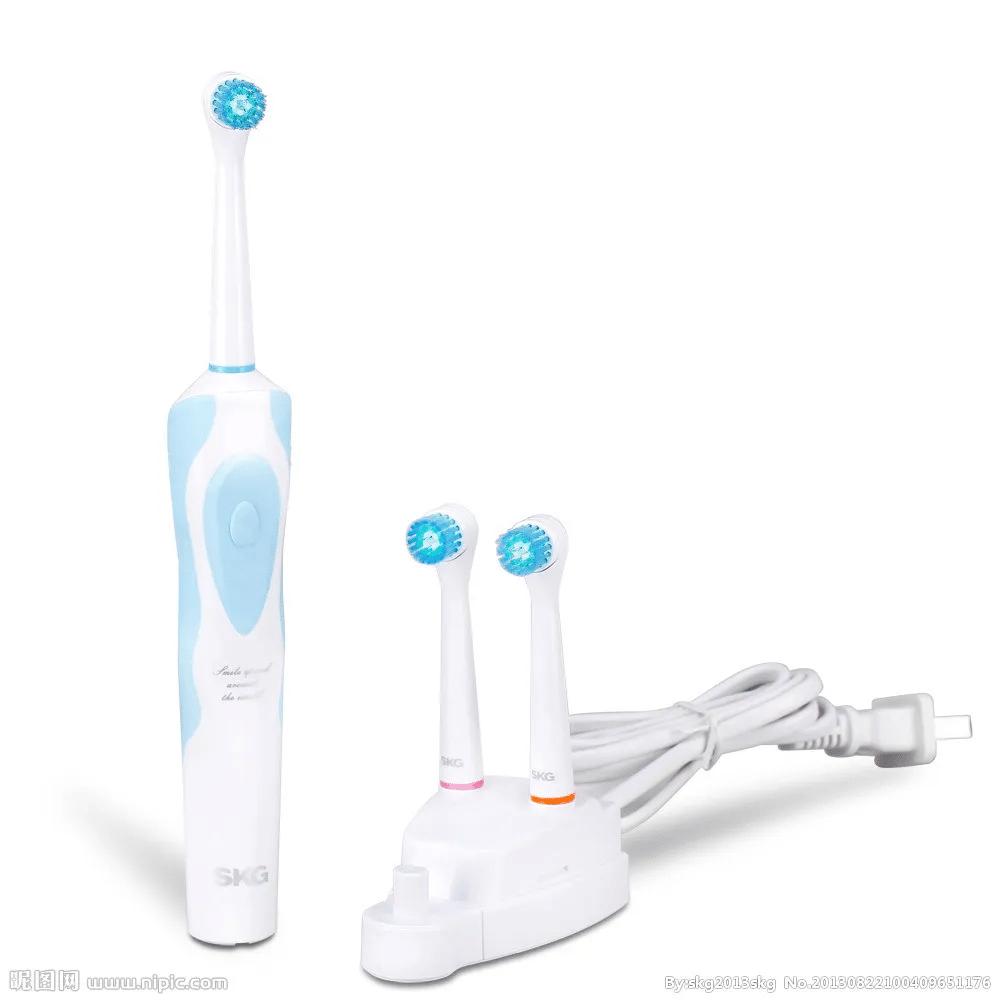
How did it 'move'?
If you open an electric toothbrush equipped with a sweeping motor, you will see the physical state of the motor during operation as follows:
Start:You press the switch, the current flows in, and the stator generates a magnetic field.
rotateThe rotor begins to rotate at high speed, and the eccentric block generates strong centrifugal force, causing high-frequency shaking (vibration) of the entire motor body.
Transmission:The rotating shaft of the rotor drives the brush head bracket to swing left and right (sweep) through a universal joint or crank slider mechanism.
Feedback:The circuit board monitors the motor speed in real-time. If the water flow resistance increases and causes a decrease in speed, the circuit board will increase the voltage and forcefully pull the speed back.
This "vibrating and sweeping" operation mode can simulate the brushing action of manual brushing more effectively than traditional single rotation or single vibration toothbrushes, providing a more efficient and gentle cleaning experience.
Summary:At present, the products using sweeping motors on the market are mainly concentrated in the field of electric toothbrushes, which is the main application scenario of this technology. With the maturity of technology, some brands have also begun to apply similar technical principles to other cleaning tools. In addition, due to the stronger composite motion capability provided by the sweeping motor, we are likely to see its presence in devices such as dental irrigators, beauty devices, or industrial cleaning brushes that require complex motion trajectories in the future.


